Introduction
In the realm of business finance, understanding the different types of costs is crucial for profitability and sustainability. Costs are broadly categorized into two primary types: fixed costs and variable costs. Grasping the distinction between these two categories enables businesses to make informed decisions about pricing, production, and overall financial strategy. This article, brought to you by ClarityCents, a financial consultancy based in Raleigh, North Carolina, will delve into the specifics of fixed and variable costs, providing clear examples and practical insights. ClarityCents is dedicated to empowering local businesses with the financial knowledge they need to thrive. Our team, led by senior financial analyst, Anya Sharma, CPA, offers personalized consultations and workshops tailored to the unique needs of businesses in the Research Triangle area. Contact us at (919) 555-2345 or info@claritycents.com for more information. Our office is located at 500 Financial Plaza, Suite 100, Raleigh, NC 27601.
Explanation of Fixed Costs
Fixed costs are expenses that remain constant regardless of the level of production or sales. These costs are incurred even if the business produces nothing. They represent a baseline of expenses that the business must cover to maintain its operations. Understanding your fixed costs is essential for setting appropriate pricing and determining your break-even point.
Characteristics of Fixed Costs
- Constant Amount: Fixed costs remain the same within a specific period, such as a month or a year.
- Time-Related: They are often related to the passage of time, such as rent or insurance premiums.
- Incurred Regardless of Production: Even if the business produces zero units, these costs must still be paid.
Explanation of Variable Costs
Variable costs, on the other hand, fluctuate directly with the level of production or sales. As production increases, variable costs increase proportionally, and vice versa. These costs are directly tied to the number of goods or services a business produces.
Characteristics of Variable Costs
- Fluctuating Amount: Variable costs change as the level of production changes.
- Directly Related to Production: The more you produce, the higher your variable costs will be.
- Zero with Zero Production: If the business produces nothing, variable costs are zero.
Examples of Fixed and Variable Costs
To further illustrate the differences between fixed and variable costs, let's consider several real-world examples that a small business owner might encounter.
Examples of Fixed Costs
- Rent: The monthly rent for office or retail space remains constant regardless of the number of sales made.
- Salaries of Permanent Staff: The salaries of employees who are paid a fixed amount each month are considered fixed costs. This includes positions like managers, accountants, and administrative staff.
- Insurance Premiums: The cost of business insurance, whether it covers liability, property, or other risks, is typically a fixed monthly or annual expense.
- Property Taxes: Taxes on business property, such as land and buildings, are usually assessed annually and paid in fixed installments.
- Depreciation: The gradual decrease in the value of assets like equipment and vehicles is a fixed cost, often calculated on a monthly or annual basis.
- Loan Payments: Regular payments on business loans, excluding the interest portion (which can fluctuate), are a fixed cost.
- Subscription Fees: Costs for essential software or online services needed to run the business, such as CRM software or website hosting, are typically fixed.
Examples of Variable Costs
- Raw Materials: The cost of materials used in production varies directly with the number of products made. For example, a bakery's flour and sugar costs increase as more cakes are baked.
- Direct Labor: Wages paid to workers directly involved in production, especially if paid on an hourly basis or per unit produced, are variable costs.
- Shipping Costs: The cost to ship products to customers increases as the number of orders fulfilled increases.
- Sales Commissions: Commissions paid to sales staff are variable costs, as they directly correlate with the amount of sales generated.
- Packaging Costs: The cost of packaging materials increases with each product that is manufactured and prepared for sale.
- Utilities (Indirect): While some utilities might have a base fixed cost, the portion that varies with usage (like electricity for running machinery) is considered a variable cost.
- Credit Card Fees: Fees charged by credit card companies on each transaction are directly related to sales volume and, therefore, are variable costs.
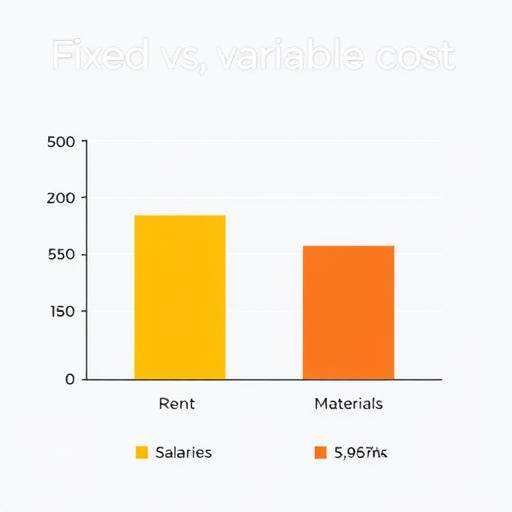
Here's a table summarizing the key differences:
| Characteristic | Fixed Costs | Variable Costs |
|---|---|---|
| Definition | Costs that remain constant regardless of production level. | Costs that fluctuate with the level of production. |
| Relationship to Production | Independent of production. | Directly proportional to production. |
| Examples | Rent, salaries, insurance premiums. | Raw materials, direct labor, shipping costs. |
Conclusion
Understanding the distinction between fixed and variable costs is essential for effective financial management. By accurately identifying and analyzing these costs, businesses can make informed decisions regarding pricing strategies, production levels, and overall profitability. As Anya Sharma from ClarityCents often advises her clients, "A clear understanding of your cost structure is the foundation for sound financial decision-making. Don't underestimate its importance." For personalized assistance in managing your business finances in the Raleigh area, contact ClarityCents at info@claritycents.com or (919) 555-2345.